

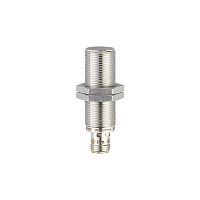
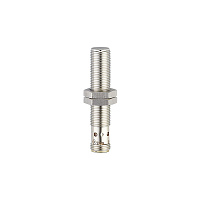
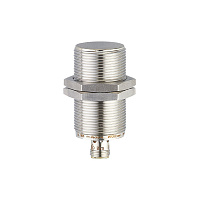
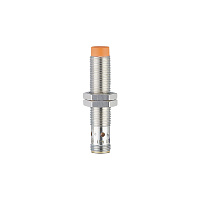
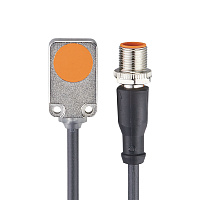
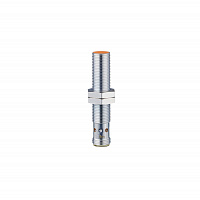
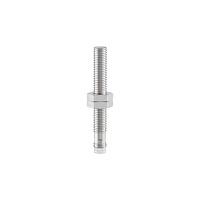
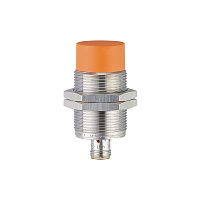
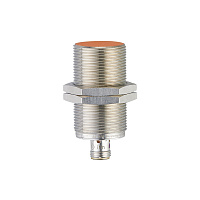
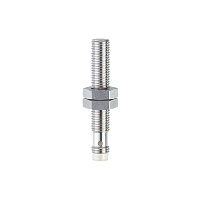
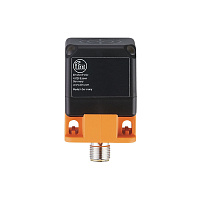
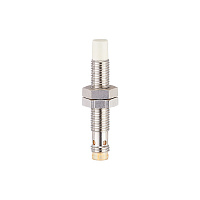
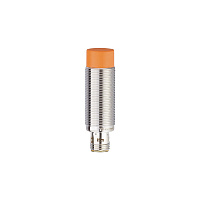
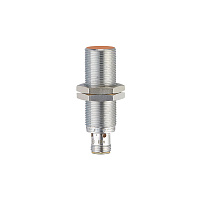
A displacement sensor is a device that provides absolute distance values for all types of metal regardless of color, texure, shininess,or dust. Displacement sensors are used in industrial settings for distance measurement, thickness measurement, and vibration measurement.
High-precision displacement sensor
The P|Prox displacement sensor series provides precise, accurate, continuous displacement measurement with submicron resolution for industrial settings. This high-precision sensor provides absolute distance values for all types of metal regardless of color, texture, shininess, or dust.
The sensors employ a magnetic field for reliability and innovative digital conversion for high resolution accuracy surpassing the accuracy of laser sensors.
Inexpensive alternative to expensive measuring systems
Many industrial applications require accurate detection of distances to metallic surfaces, for example, sheet metal detection in the automotive industry or distances at grinding mills in the food sector. In these applications, the new distance sensors are an inexpensive and powerful alternative to expensive measuring systems.
Accurate distance detection
Using an inductive and, thus, non-contact detection principle, these displacement sensors detect distances in the micrometer range and provide them as distance values via IO-Link.
The type of metal has no influence on the measured value. Only the shape factor of the target influences the possible measuring range and the accuracy of the sensor.
The sensor is factory calibrated and ready for immediate use. Thanks to 1-point or the even more-accurate 3-point calibration, IO-Link guarantees high accuracy even with deviating target shape factors.
Robust design
The sensors are available in 60 mm long industry standard M12, M18 or M30 housings for flush or non-flush mounting. Moreover, the sensors are magnetic field resistant and have a stainless steel threaded sleeve. As a result, they have a high protection rating of up to IP69K and can be easily used in demanding environments.
Displacement Sensor Applications
The Pprox series measures displacement in three ways:
- Distance measurement
- Thickness measurement
- Vibration measurement
Features
- Non-contact sensing for enhanced durability and reduced maintenance
- Easy integration with current system via IO-Link module
- Extreme accuracy and reliability for thickness, vibration, and distance measurement
Displacement sensor types and how they operate
The Pprox displacement sensor from ifm uses innovative digital conversion technology to provide unparalleled precision, accuracy, and reliability for industrial applications. While it provides a unique solution for measuring metallic targets, other technologies are useful in various displacement measurement needs.
Various types of displacement sensors operate based on several physical principles to measure distance or displacement accurately. There’s no one universal principle. Rather, each operates based on a specific physical phenomenon unique to its design.
- Inductive sensors operate on the principle of inductance change when a metal object moves closer to or further from the sensor's coil, altering the magnetic field and hence the inductance. They’re commonly used to detect the positions of gears and other metal components.
- Laser sensors emit a focused laser beam towards the target object.The displacement is determined based on the time it takes for the laser light to travel to the target and back or through changes in the properties of the reflected light, such as phase or intensity. This precision measurement is used for verifying material thickness or component positions.
- Resistive sensors utilize change in electrical resistance as a result of the displacement of a conductive element. The movement alters the path of current flow, changing the resistance value, which can then be measured. These are often found in consumer electronics for functions such as volume control or joystick position sensing and not in industrial automation environments where they will not withstand the rigorous requirements for millions of switching cycles.
- Capacitive sensors measure displacement through changes in capacitance, which occurs when the distance or orientation between the sensor's conductive plates changes. Capacitive sensors are often used for proximity sensing and level sensing.
- Piezoelectric sensors rely on the piezoelectric effect, where certain materials generate an electrical charge in response to applied mechanical stress. The charge amount is proportional to the displacement. They’re commonly employed in medical ultrasound devices and vibration monitoring systems.
- Electromagnetic sensors detect displacement through variations in electromagnetic fields. This can involve changes in inductance, capacitance, or the interaction with a magnetic field, depending on the sensor design. Their uses are primarily in onboard automotive applications such as vehicle speed sensors and crankshaft position sensors.
- Optical Sensors use light, often from a laser or LED, to measure displacement. The measurement can be based on the interruption, reflection, diffraction, or intensity change of the light beam when an object moves. These are commonly found in elevator position or door controls.
How to measure displacement
Measuring displacement involves calculating the distance an object has moved from its initial position to its final position. However, displacement is not just a measurement. Rather, it represents the vector quantity of position displacement, including both magnitude and direction.
The displacement measurement formula is represented as:
s = sf - si
where:
- s is the displacement;
- sf is the final position;
- si is the initial position.
Displacement is typically measured along a straight line. The standard unit of measurement is the meter (m). However, for industrial applications such as double metal sheet detection, precision control of rollers, or saw blade tension monitoring, displacement is measured in nanometers (nm) or microns (µm).